Lead Full-Stack & AI Engineer · 2026
AI Marketing Control Center
Marketing videos that make and publish themselves.
- GPT-4o
- ElevenLabs
- HeyGen
- Runway
- Claude
- FFmpeg
- Node.js
- SQLite
- Meta Graph API
The problem
Posting short marketing videos every week normally takes a copywriter, a presenter, an editor and someone to post them — days of work for every clip. The goal was to do the whole chain in software, without ever posting something broken or overspending on AI services.
What I built
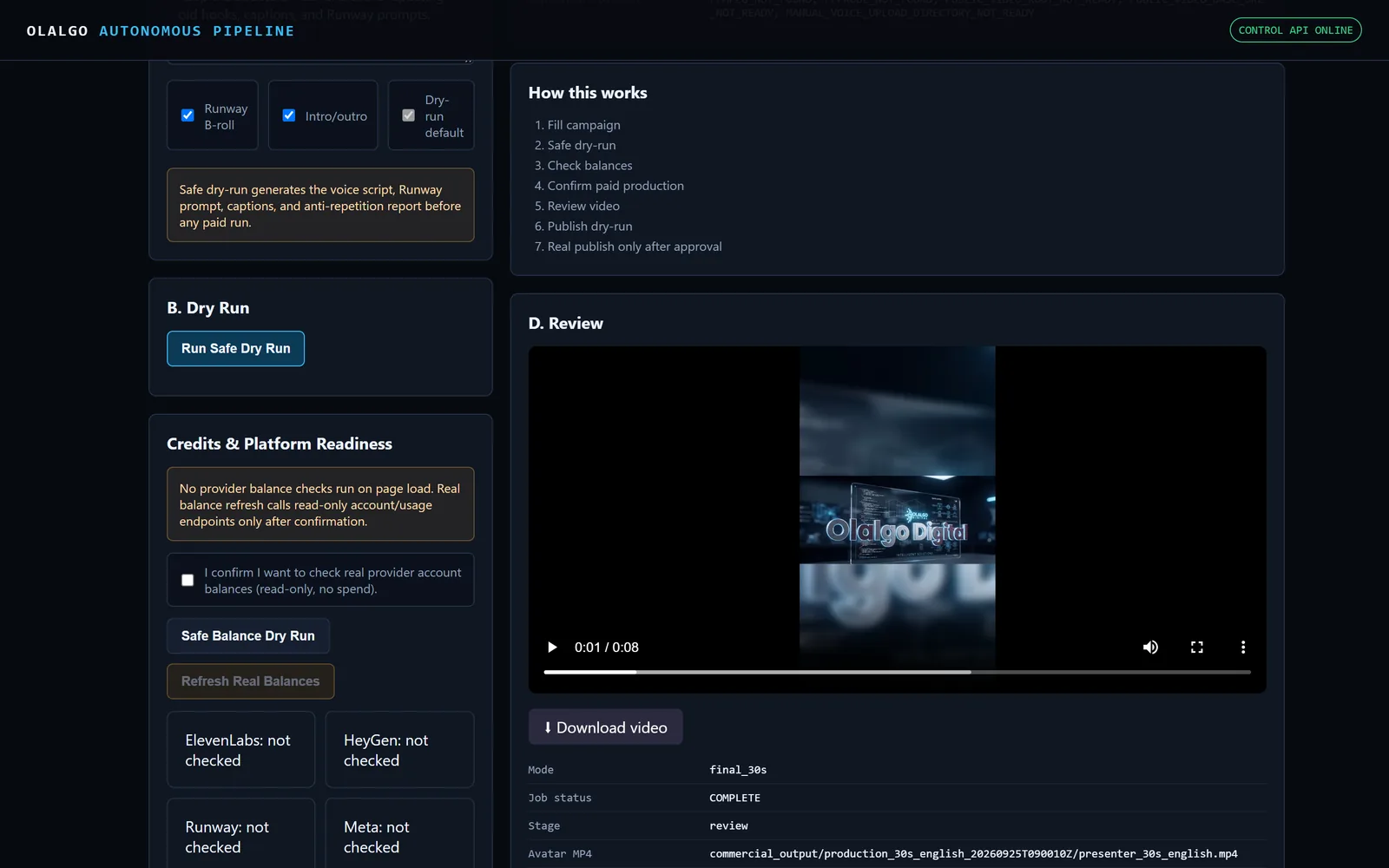
A video studio in software with two production lines. The English line runs on its own: AI writes the script, voices it, renders a presenter and scenes, edits everything into a branded vertical video and posts it. The Arabic line keeps a person in charge: the presenter records their own voice, AI plans the scenes and writes the captions, and nothing is posted until the team approves it.
- Can run on a schedule: a new English video every Monday and Thursday morning
- AI writes three ad ideas for each video, then the script, hook and scene ideas
- Checks the voiceover length and rewrites the script if it is too short or too long
- An AI presenter (a digital twin) lip-synced to the voice
- Automatic editing into a 1080×1920 vertical video with brand outro and music
- Arabic videos with the presenter's own recorded voice and AI scenes timed to the script
- A cost estimate and a one-time spending approval before any paid AI step on Arabic videos
- Publishes as a Facebook Page video and an Instagram Reel, and never posts the same video twice
- A safe test mode that runs the whole pipeline with test media and no paid AI calls
- Full job history, plus secure login with lockout after five failed attempts
The AI inside
Five AI services each do one job. GPT-4o writes the ad ideas, scripts and the Facebook and Instagram captions. ElevenLabs creates the English voice. HeyGen turns the voice — or the presenter's own recording — into a talking presenter. Runway generates the short scenes. Claude drafts Arabic scripts from the company's approved information. Every paid step is checked against a budget first, and the English line retries on its own when a voiceover comes out the wrong length.
Results
- Designed to produce a branded video for roughly $4–5 in AI service costs, with a hard cap of $8 per video
- English and Arabic production lines from one dashboard
- Nothing broken gets posted: failed runs are stopped and scheduled runs send an email alert
- Backed by 58 automated test scripts (1,300+ checks), including isolated end-to-end tests of the budget guards, approval gates and video editing
Screens
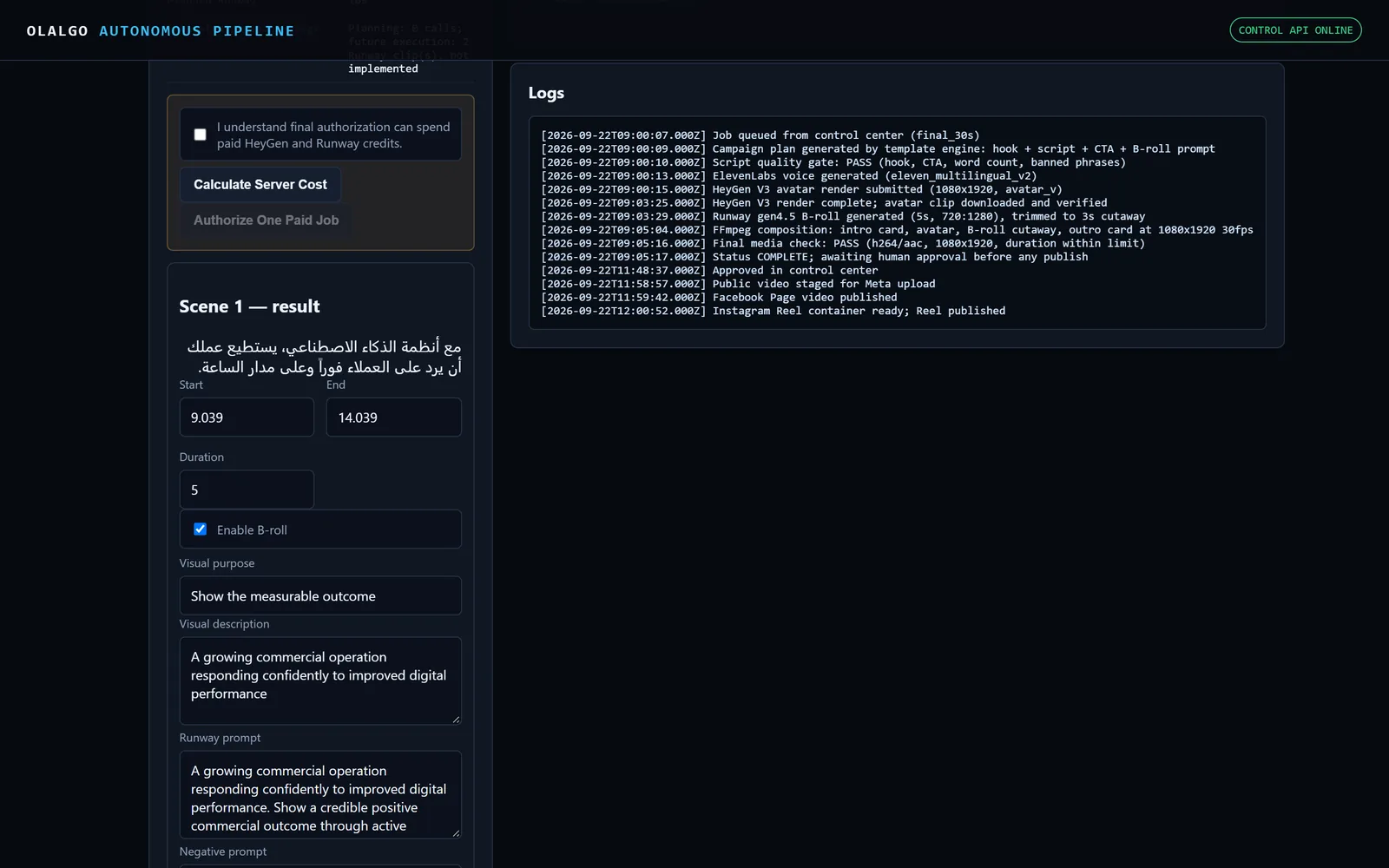
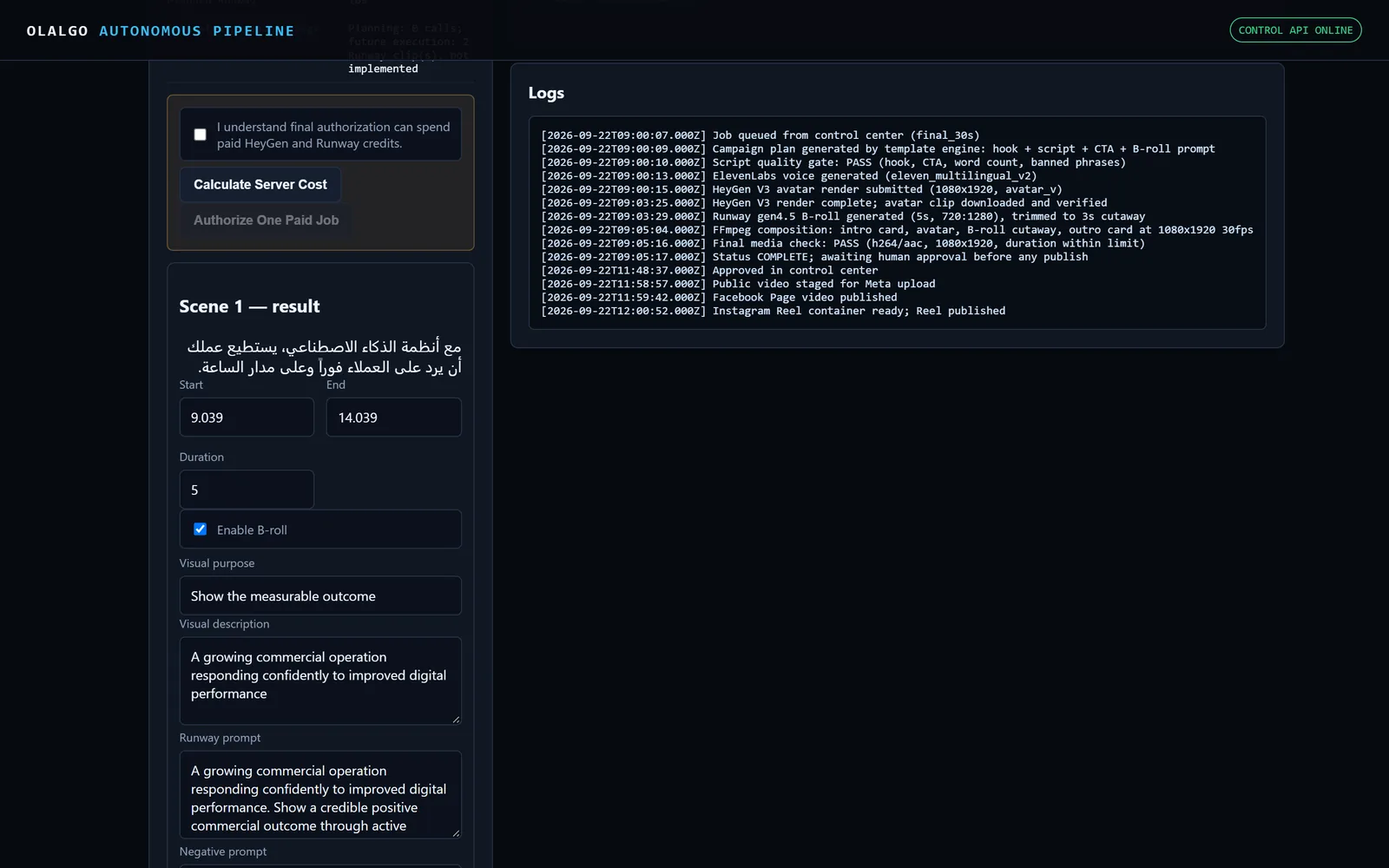 Show larger: A step-by-step log of one video from start to finish: script check, ElevenLabs voiceover, HeyGen AI presenter, Runway AI scene, automatic editing, human approval, then posting to Facebook and Instagram. On the left, one scene of an Arabic video is timed against the script.
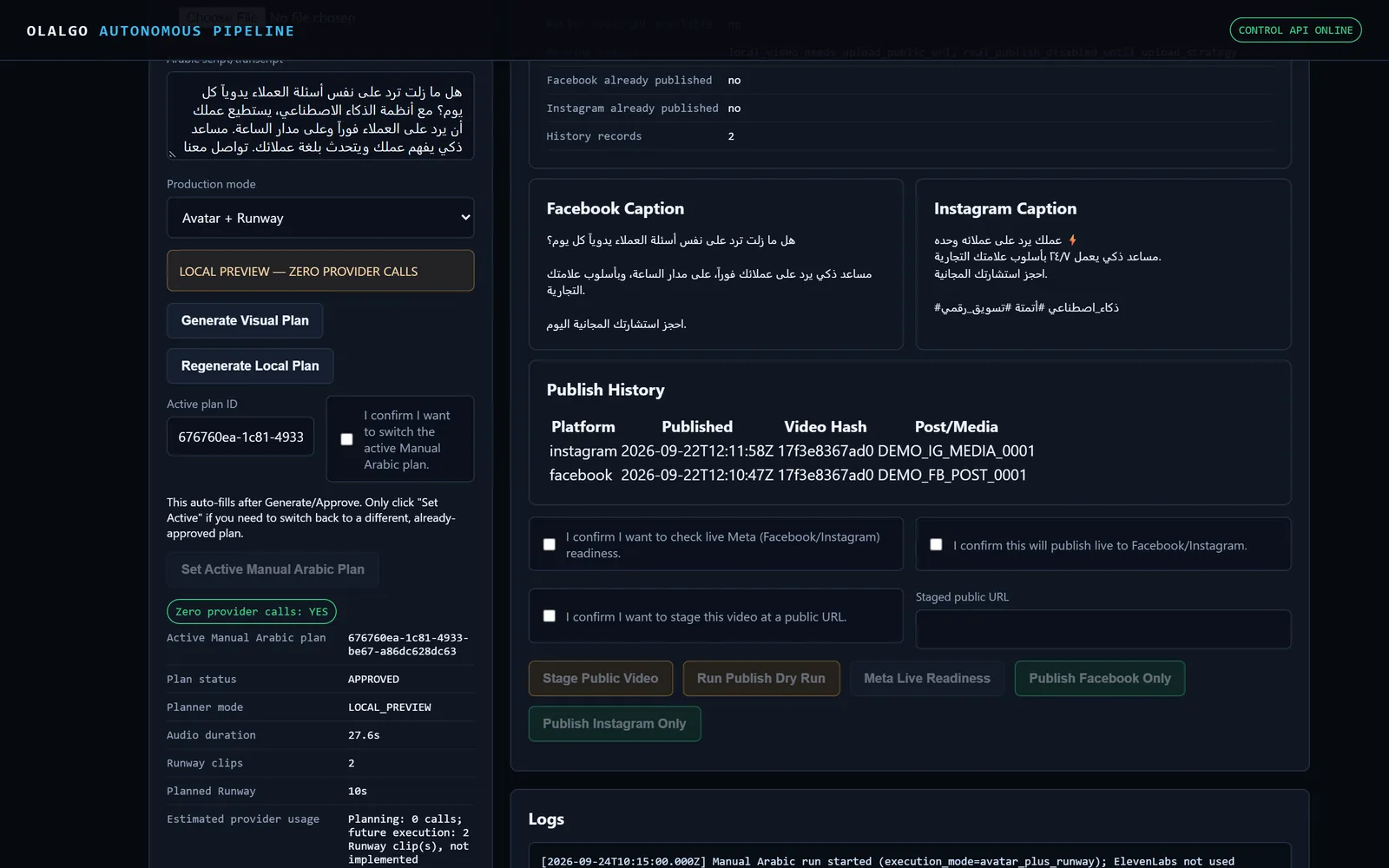
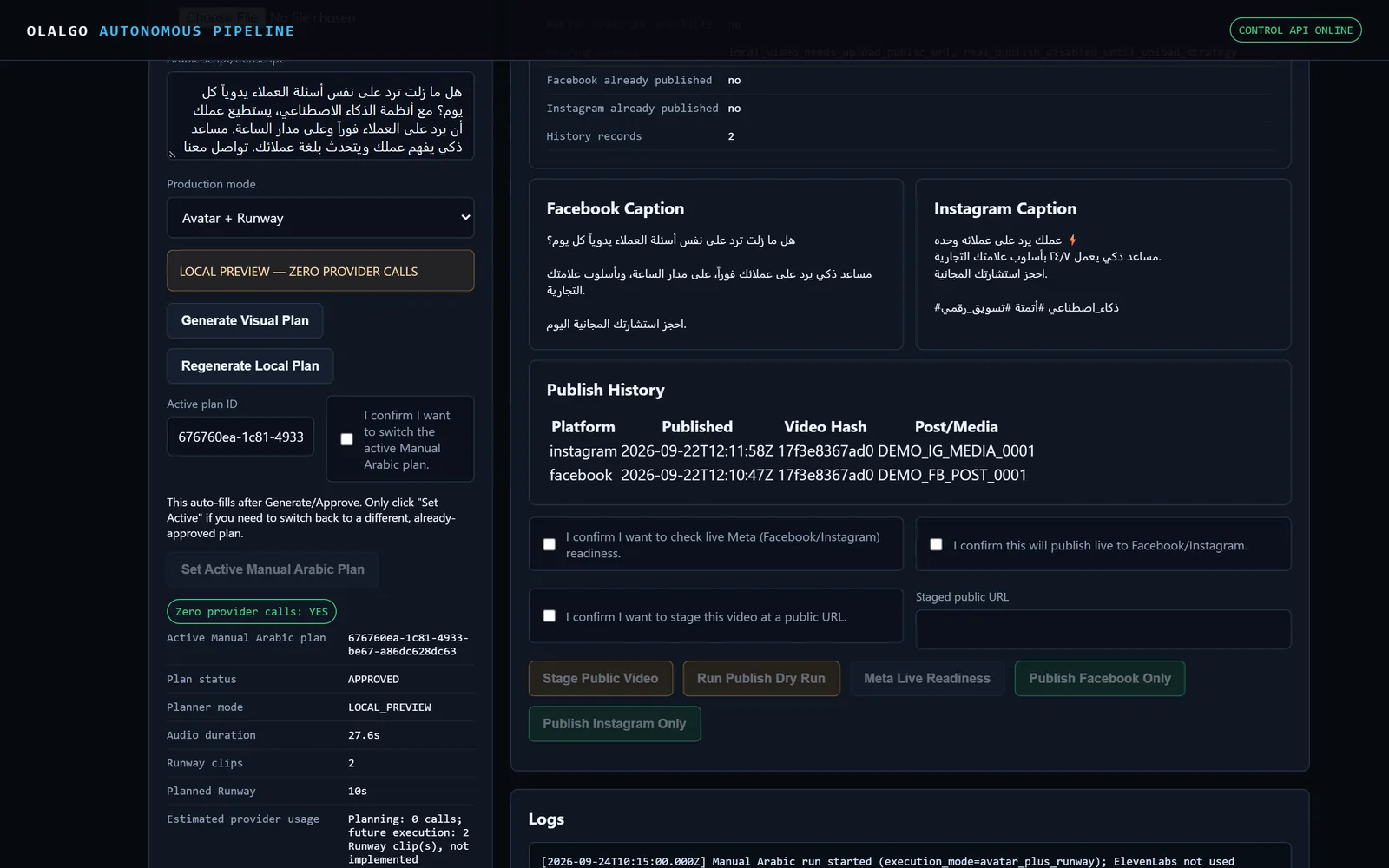 Show larger: An Arabic video ready to publish: AI-written Arabic captions for Facebook and Instagram, the approved scene plan, and the publishing history. Nothing goes live until the team ticks explicit confirmation boxes.
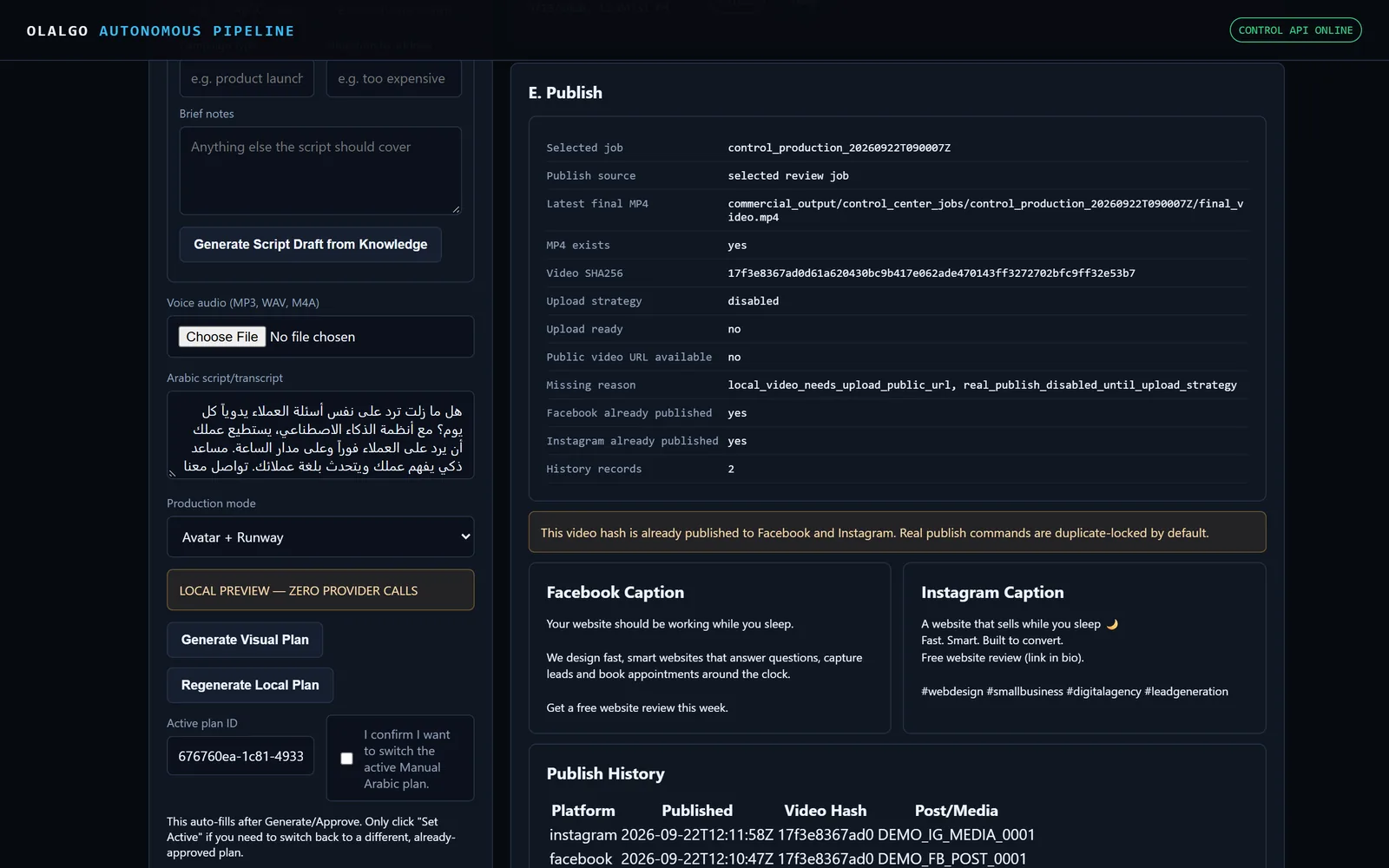
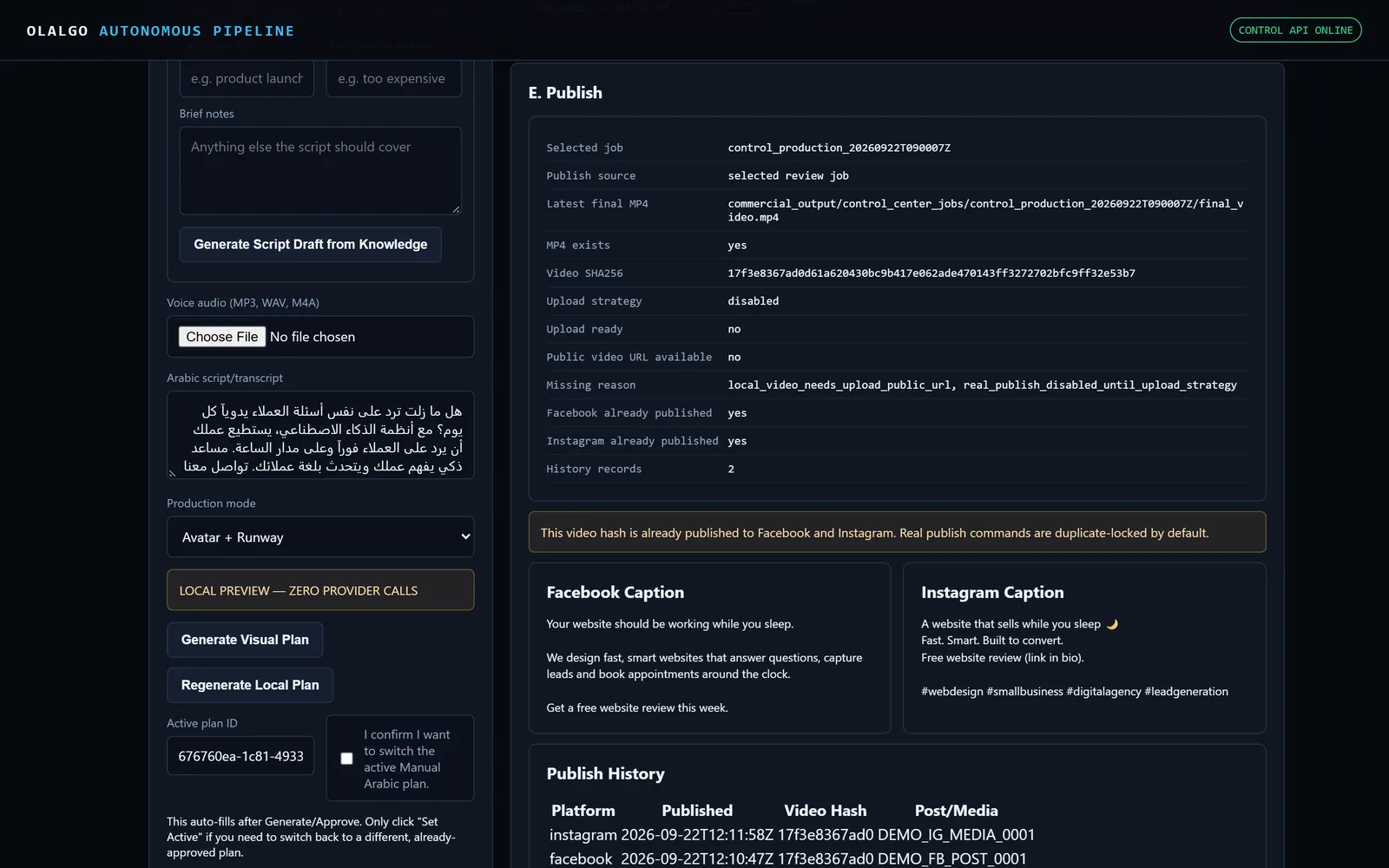 Show larger: Publishing panel for an approved video: separate Facebook and Instagram captions, a publishing history, and a notice that this exact video has already been posted, so it cannot be posted twice by mistake.
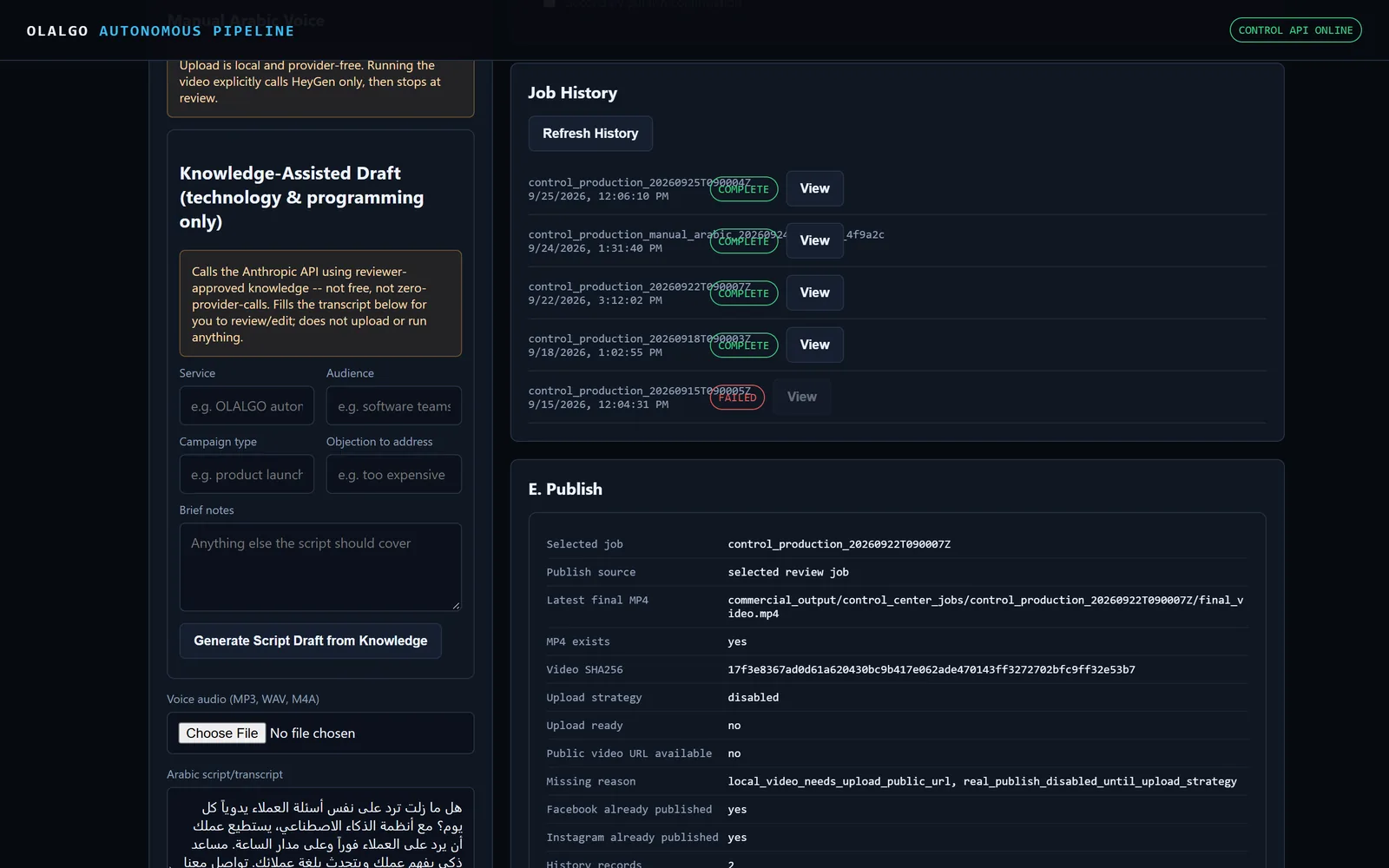
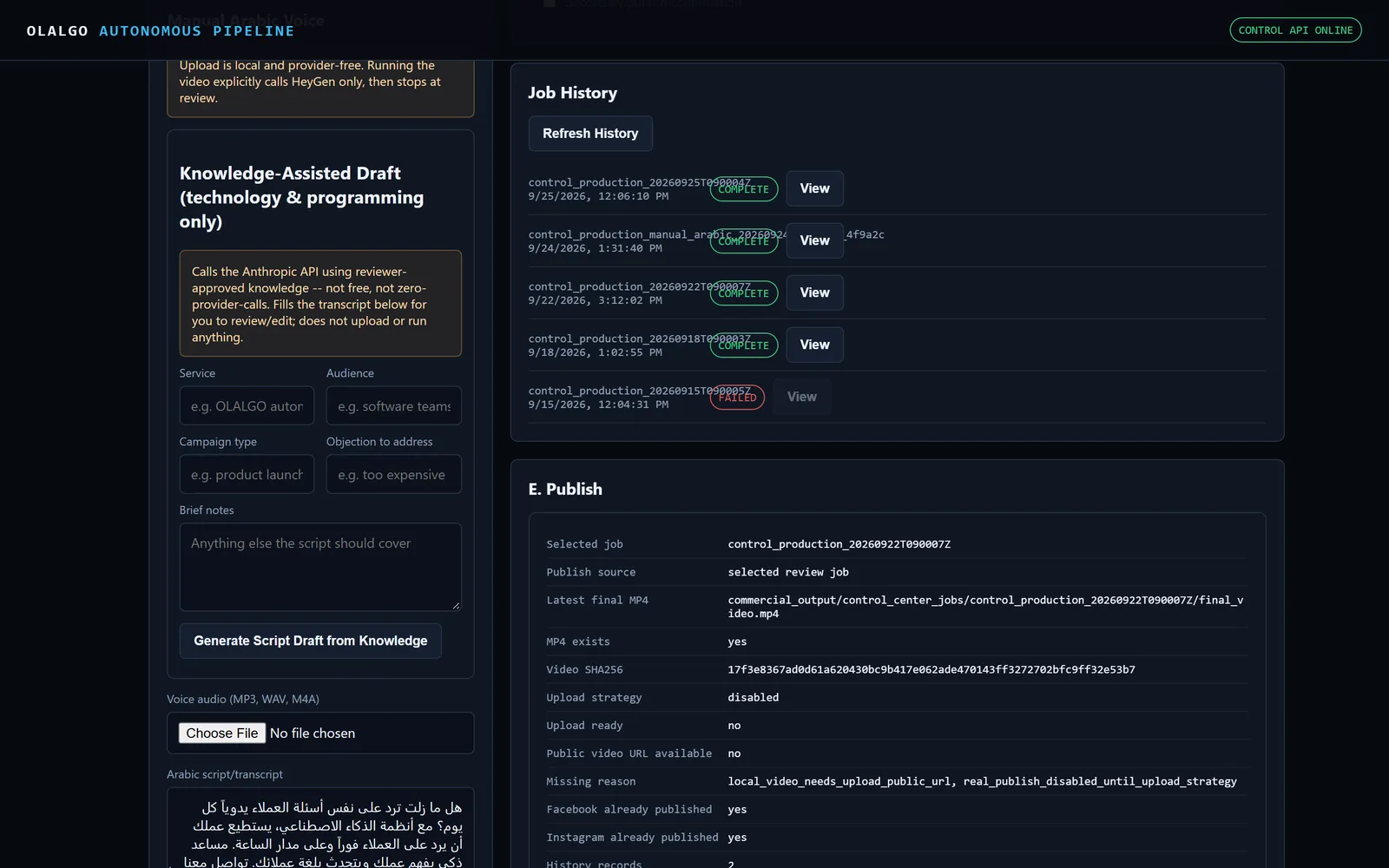 Show larger: Job History lists every video run with its date and whether it completed or failed. Alongside it, the team can have AI draft an Arabic script from the company's approved information, then upload the presenter's own voice recording.
What I was responsible for
- Product planning: turning "automate our video marketing" into two production lines, fully automated English and human-approved Arabic
- System architecture: the control center, the job records, the pipeline and the deployment
- AI integration: GPT-4o, Claude, ElevenLabs, HeyGen and Runway
- Video engineering: automatic editing, 9:16 formatting, scene-timed overlays, music mixing and media checks
- Cost and safety: per-video budget caps, spending approvals, typed confirmations, test mode and duplicate-post protection
- Publishing to Facebook and Instagram through the Meta Graph API
- The dashboard: campaigns, Arabic production, review and approval, job history and publishing
- Testing: 58 test scripts, including safety tests for the budget, approval and publishing guards
- Deployment and operations: production server, secure login and failure alerts
- Moving the system from an earlier Vercel and Redis version to a simpler single-server design